Figures released by China's Ministry of Civil Affairs indicated China had 220 million (or 16 percent of the population) residents aged 60 or greater by the end of 2015. As China is rapidly becoming an aging society, and as an increasing number of seniors are living without their children, caring for the aged is an issue that is generating much concern across the country. Some experts suggest the issue is becoming a serious social problem. Therefore, efforts must be made to solve difficulties in the provision for the aged, so the elderly can live their remaining years in comfort.
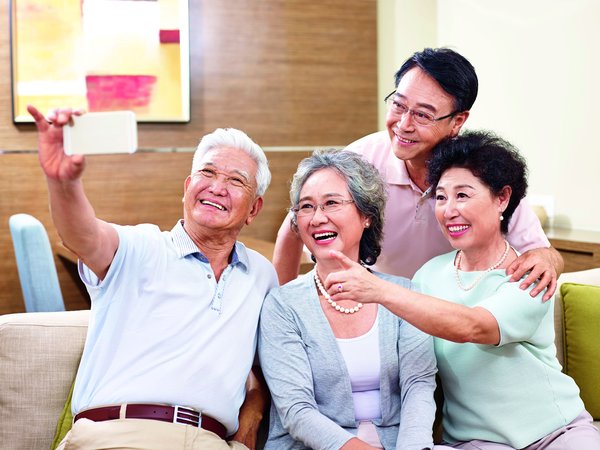
As China is rapidly becoming an aging society, and as an increasing number of seniors are living without their children, caring for the aged is an issue that is generating much concern across the country.[Courtesy of VCG]
As difficulties in providing for the aged have aroused general concern in recent years, different regions of the country have begun exploring ways to provide better services to the aged.
Homes for Elderly without Walls
China's first generation of "only children," who were born during the 1970s or 1980s, are now grown and have families and careers of their own. As many of the "only children" have to cope with intense daily pressures and incredibly tight work schedules, they cannot return home to visit their parents frequently. As a result, their elders feel lonely.
Shang Yun, a deputy to Shanghai Municipal People's Congress, is president of Shanghai Qinheyuan Hospital. She says there is a great need for social support, especially as many "only children" have little time to take care of their parents. Yet, social security measures are inadequate to meet people's needs, and only a small number of senior citizens live in homes (with relatively complete facilities) for the aged.
An elderly person cannot depend solely on his/her "only child" for support and care, says Shang. Efforts should be made to improve China's social security system to provide for the aged.
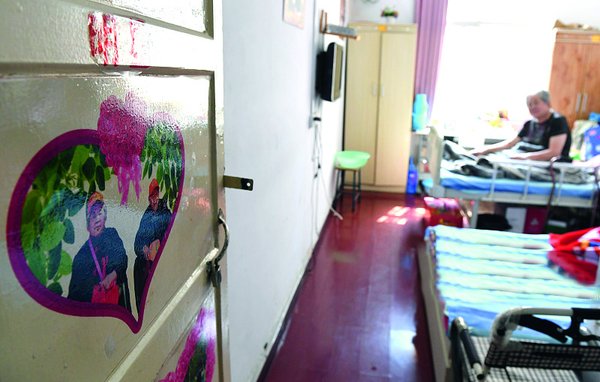
Most elderly Chinese prefer to spend their remaining years at home rather than in a home for the elderly. To accord with the aspirations and opinions of the people, some communities in Beijing, Shanghai, Chengdu, Kunming and other large cities have taken the lead in providing online platforms, so the elderly can order and receive various services (including medical treatment, housekeeping, and legal assistance services) at home. Many elderly residents (in the cities), who receive social services through the online platforms, call the platforms "homes for elderly without walls."
"Several communities in Kunming in recent years have begun using the Internet and mobile devices to improve their elder-care services," says Xu Yungui, Deputy Director of the Office of the Kunming Committee for the Elderly. "With the help of the devices, the communities provide in-home services to elderly residents. In addition to medical treatments and domestic services, the communities also provide emergency aid to the elderly and arrange for social workers and volunteers to accompany and care for the elderly. The online elder-care services supplement the in-home, elder-care services and services provided by homes for the elderly."
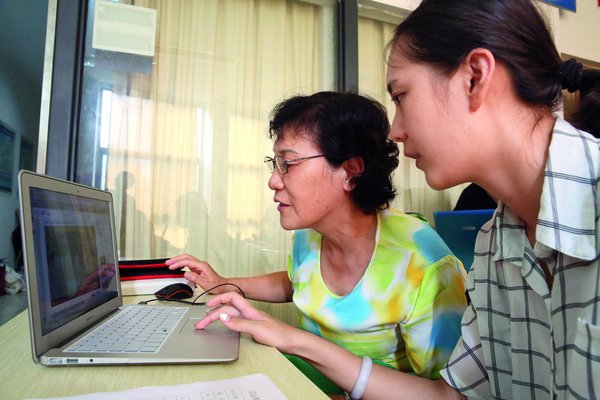
The Internet has not only made it easier for the elderly to receive services, it has also enriched their lives. "By joining chat groups, I have been able to make more friends, and I have been able to see the links, photos and stories my new friends have shared in Moments (open spaces for posting information on WeChat accounts). As a result, I have also joined several online activity groups, such as reading and painting groups, whose members share common interests," says Jiang Yue, a 60-something woman in Shanghai.
Spiritual Care
Most elderly Chinese prefer to spend their remaining years at home rather than in a home for the elderly. Statistics recently issued by the Shanghai Municipal Bureau of Civil Affairs indicated the city had more than 4.5 million seniors aged 60 or greater, more than 90 percent of whom lived at home by the end of 2016.
As many of the elderly have to depend on their children, both physically and mentally, for the rest of their lives, youngsters should visit their parents regularly to chat with them, a bureau official suggests. He also suggests young people, who are too busy to visit their parents, should often call their elders.
Zhu Jikang, a professor with the Academy of Social Sciences, under Yangzhou University, says emotion is an invisible, but strong, tie that links family members together. "Adults are duty bound to provide, both materially and spiritually, for their parents. Given the marked improvement of people's living standards in recent years, many people have traveled with their parents during festivals or holidays, to meet the elders' physiological and spiritual needs."
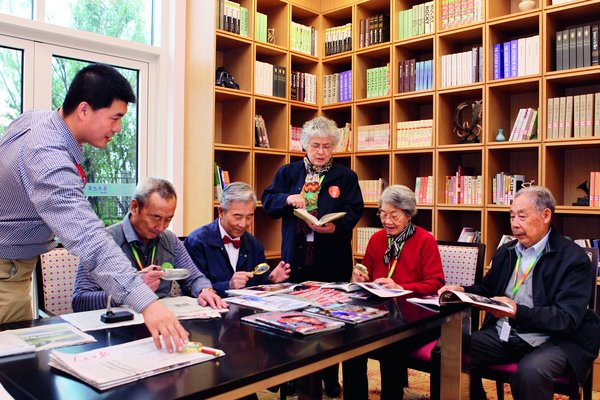
He suggests young people should, from time to time, give their parents presents. He also suggests young people should listen to their parents' stories, and they should teach their parents how to surf the Internet.
As "only children" tend to have little time to take care of their parents, many elderly people take steps to enrich their lives. Many universities for the elderly across China have too many students. Many elderly people, especially those who believe studying at schools is a good way to enrich their spiritual lives, work slowly so they can stay in the schools.
Qiu Jianxin, a professor in the Department of Sociology at the College of Humanities and Social Sciences, under Nanjing University of Aeronautics and Astronautics, suggests when the elderly study, they may feel less lonely. He says governments, at various levels, should entrust universities and primary and middle schools to provide courses to senior citizens, so more elderly residents will have opportunities to study.
"The improvement of elderly people's education will benefit not only the seniors, but also the whole of society, as the elderly will have a deep influence on their children's values," Qiu concludes.
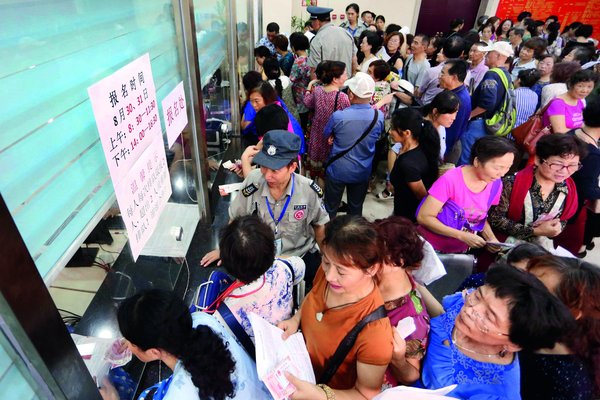
Yan Dongxue, a public servant from Beijing, stresses the importance of caring for the elderly to satisfy their emotional needs. She says there is a great need for social support, especially as many "only children" have little time to take care of their parents.
Says Yan: "In addition to improving its social security system, the Chinese Government should work hard to satisfy the spiritual needs of senior citizens. Also, young people should spend more time with their parents, rather than merely provide for their elders."
Yan suggests governments, at various levels, should allocate more money to establish universities for the elderly, so more senior citizens can study in the schools to enrich their lives. She also suggests the governments should either provide subsidies to privately run universities for the elderly, or eliminate or reduce the schools' taxes.
Recreational Activities
In recent years, the neighborhood committees of many regions in China have organized various recreational activities to satisfy the spiritual needs of the elderly.
Cheers and laughter can be heard every day in the activity center of Yingyuan (a community in Weifang, a city in East China's Shandong Province). For many of the residents, especially senior residents, the center is a fun place. Why? Members of the senior residents' song and dance troupe often rehearse for programs, and the residents participate in various recreational activities to enrich their lives. The center also provides a platform for the elderly to share their experiences in improving their health.
"Our group is composed of more than 50 members. Despite our advanced age (the eldest member is aged 82), we take delight in rehearsing (for programs) in the center. My children told me I look younger and more energetic now," says Zhao fengying, a member of the community's singing group.
Many elderly residents have joined one or more of the community's recreational groups (including dance, glee, opera, fashion show and bodybuilding groups) in recent years.
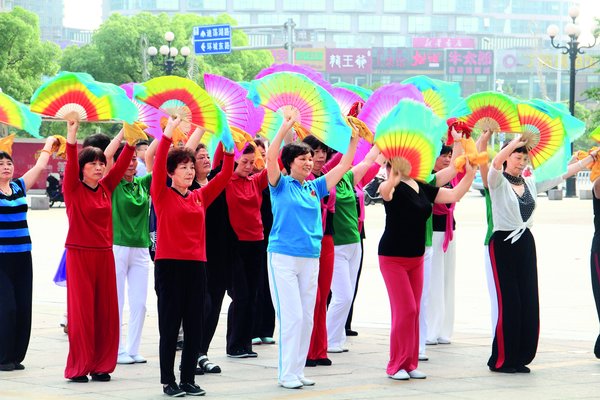
During the past few years, the community has often bought costumes for members of the senior residents' art troupe, when they have performed for the residents. Many of the troupe's performances, including songs, skits and fashion shows, have been well received by residents.
To help the elderly improve their physical and spiritual health, the community in recent years has organized various sports and recreational activities. For example, the community has offered various dance, singing and musical-training courses in the center. The elderly can also play chess, participate in various competitions and fashion-model training in the center.
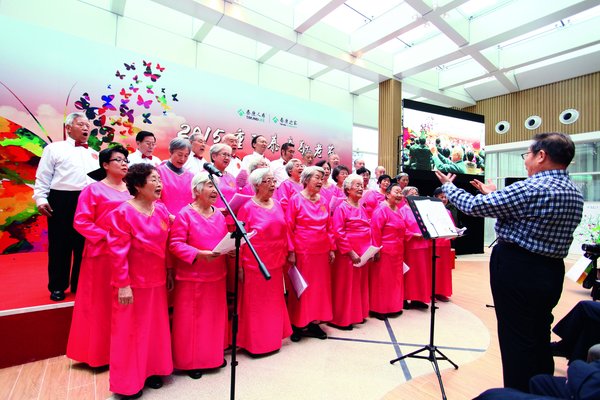
The center often organizes activities, from courses on healthcare or Chinese culture to opportunities for the elderly to share their recipes and dishes and/or their childrearing experiences.
The center in recent years has put much effort into cultivating key members of the community's art and literature groups. With the help of professional singers and dancers, the groups' members have greatly improved their performing skills.

