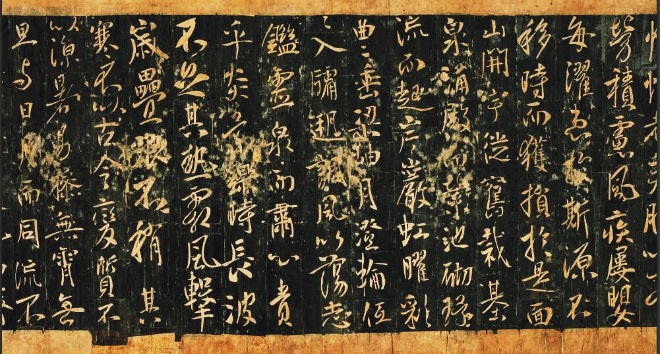
BnF collection of Dunhuang manuscripts (唐太宗《温泉铭》P.4508), which is known as the earliest surviving rubbing from the stone inscription bearing calligraphy handwriting of Li Shimin, Emperor Tai Zhong of the Tang Dynasty (618-907).
More than 5,300 pieces of Dunhuang manuscripts have been "returned" from France in digital form and are available online, according to the National Library of China.
These digital resources are provided by the National Library of France (La Bibliothèque nationale de France/BnF) , which holds more than 7,000 original copies of Dunhuang manuscripts.
The Dunhuang manuscripts are documents discovered in the Mogao Grottos in China's Gansu Province in the early 20th century. There are more than 50,000 of them, featuring history, linguistics, art and religious documents.
Dating from the 5th to 11th centuries, the majority are in Chinese, but some are represented in other languages such as Khotanese and Hebrew.
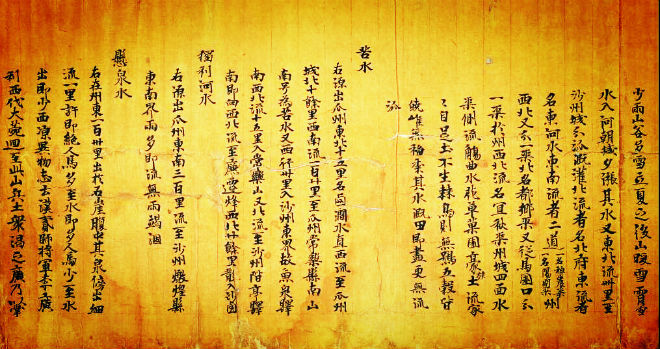
BnF collection of Dunhuang manuscripts (沙州都督府图经 P.2005).
At present, around 16,000 Dunhuang manuscripts are in the National Library of China, while the rest are scattered overseas in Russia, Britain, France and Japan.
In 1908, French sinologist Paul Pelliot took 7,000 Dunhuang manuscripts to France and they are widely recognized as the most important parts.
China launched Ancient Books Preservation Project in 2007, and began to investigate and retrieve millions of overseas Chinese classics. In 2015, the National Library of China launched a digital cooperation project, using digital content or high-definition print to popularize Chinese ancient classics.
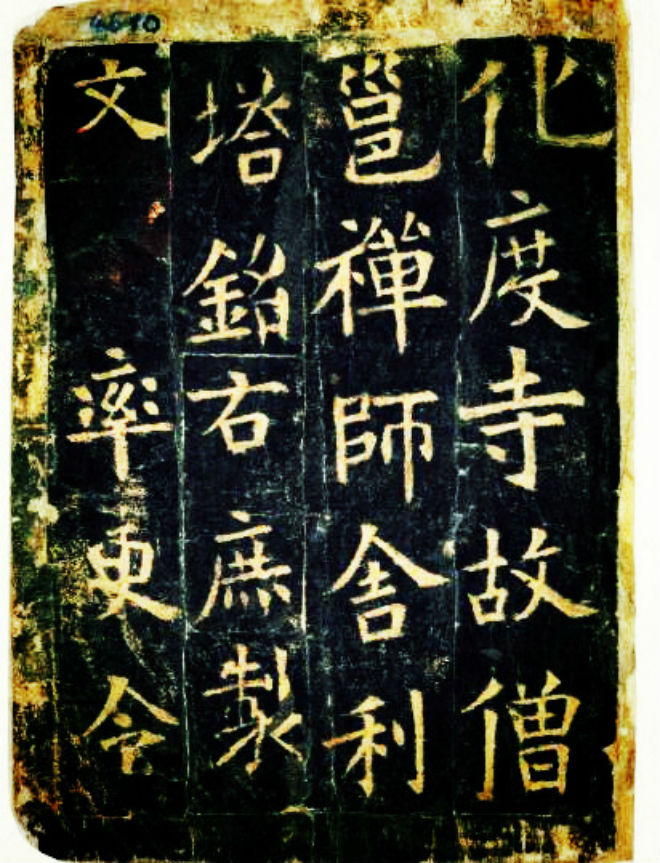
BnF collection of Dunhuang manuscripts (欧阳询《化度寺故僧邕禅师舍利塔铭》P.4510).
According to Lin Shitian, director of the National Center for Preservation and Conservation of Ancient Books, France's national library donated digital documents of the painting series "Forty Scenes of the Yuanmingyuan," the Old Summer Palace, to the National Library of China in 2015, and suggested further cooperation on Dunhuang relics.
More than 50 volumes of "The Yongle Canon," an ancient encyclopedia, were also retrieved in digital form from Harvard University, Oxford University, the British Library and other organizations abroad, Lin said.
Zhao Wenyou, also from the National Center for Preservation and Conservation of Ancient Books, said that unless some private collectors donate or sell, most of the hard copies of Chinese ancient books scattered overseas are hard to retrieve.
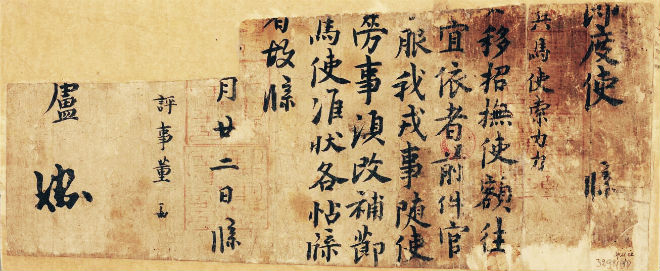
BnF collection of Dunhuang manuscripts (敕归义军节度使改补索力力为兵马使牒).
"Digitization may bring back ancient works in digital form, which is a more realistic and feasible solution," Zhao said.
According to Zhao, they are investigating significant ancient books overseas and setting up bibliographic databases. They are also cooperating with other countries to "bring back" precious documents using digitization or photocopying.
"These paper collections are brittle and prone to acid. We have to race against time to do these jobs," Zhao said.
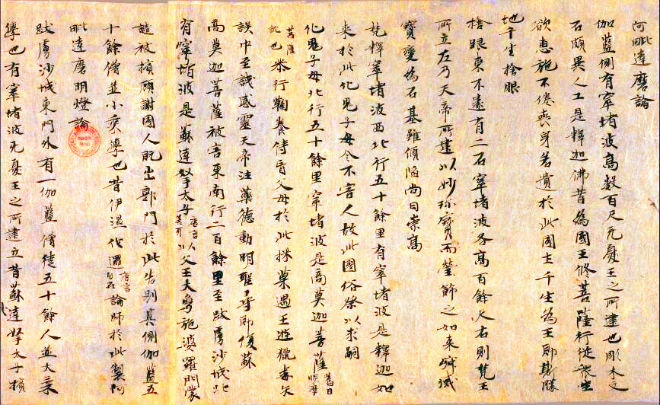
BnF collection of Dunhuang manuscripts (大唐西域记卷第二 P.3814).
The 5,300 pieces of Dunhuang manuscripts are not just for researchers, the general public can also log in the website of the National Library of China for retrieval and full-text browsing, said Liu Bo, the project leader of Dunhuang documents.
"These documents will be the window for people from all walks of life to understand and study the history of China. Only in this way can we make these precious ancient books live," Liu said.

