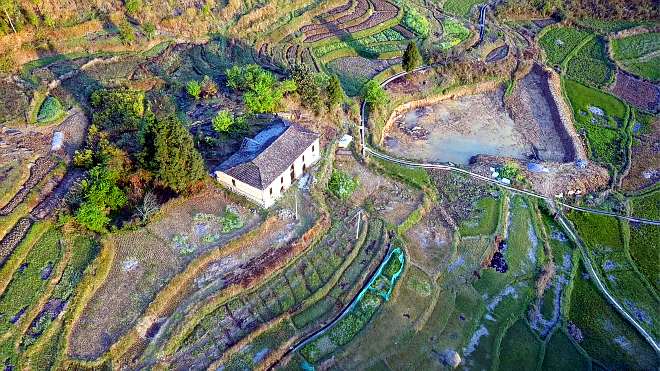
Swiss artist Kong Ande's "adopted house" looks particularly beautiful among terraces. Photo by Liu Qinbing
Few people like to rent an old tumbledown house, but if it is in a village only 4 kilometers away from the UNESCO world natural heritage site Libo karsts it is a different story.
Soon after Wei Zhenqi, a 75-year-old farmer of the Bouyei ethnicity, moved out of his run-down wooden house to a new brick house last year, a Swiss person "adopted" the shack and renovated it.
Wei's house is among 96 ancient stilt houses that have been rented by outsiders in Hongjiang Village, Guizhou Province, as the local government is finding a novel way to give a new life to poor farmers.
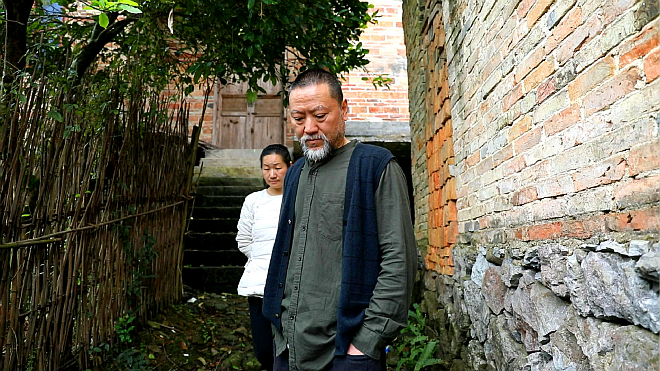
Liu Songtian, a sculptor, ponders over outside his own "adopted" old house. Photo by Liu Qinbing
With a price ranging from 5,000 yuan (around 800 U.S. dollars) to 30,000 yuan, the abandoned old houses have been adopted by 52 artists from home and abroad, and some of them were redesigned into painting studios, family inns or pubs.
The leases usually last 10 to 20 years. When they expire, the renovated houses will be returned to their original owners.
Attracted by the unique architecture, Feng Jiali, a painter from Beijing, rented three houses in the village, which is home to multi-ethnic groups such as the Bouyei, Shui and Miao.
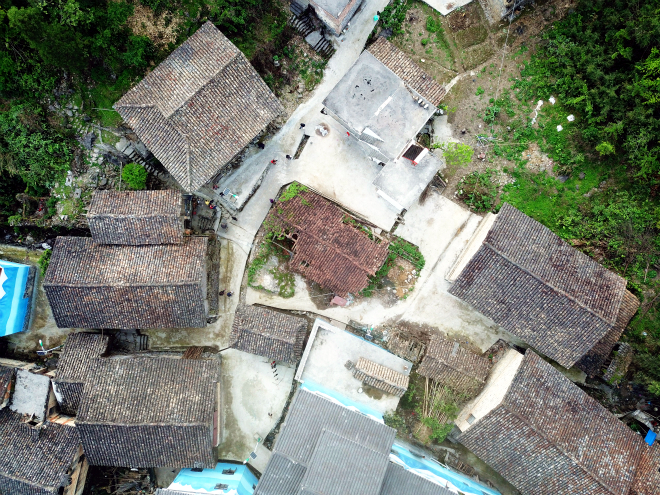
Aerial view of "pole-railing" style houses. Photo by Liu Qinbing
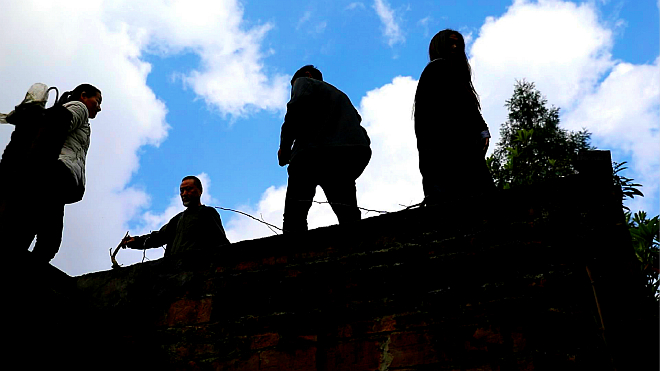
Artists take a close check on the roof of an old house. Photo by Liu Qinbing
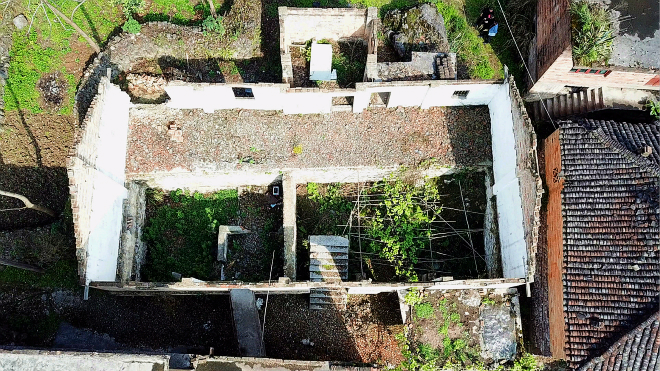
There are many old houses left ruined and roofless in Hongjiang Village.
One of the houses has no roof and large parts of the walls have collapsed. Feng intends to restore its original features while adding a modern touch.
Feng was attracted to Hongjiang Village by aspects of its culture such as traditional tie-dyeing, an ancient dyeing technique practised by many women in the village.
"The local culture can give me some insights on artistic creation," she said. "Meanwhile, I can give back by bringing changes to Hongjiang residents too."
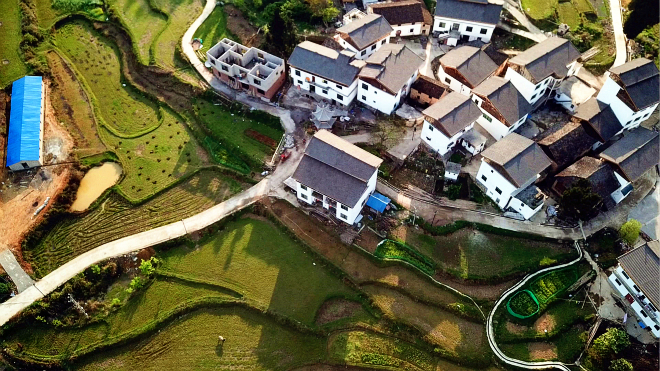
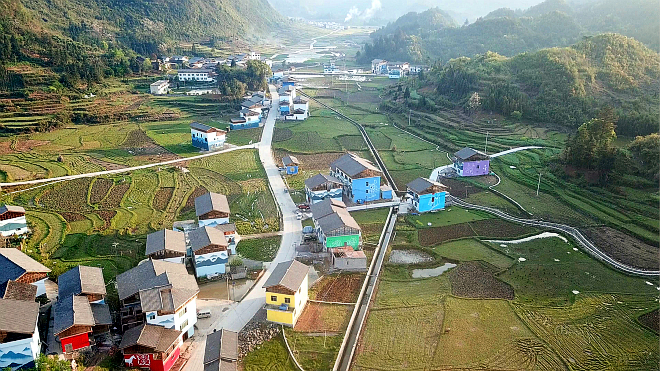
Aerial view of Hongjiang Village's "artistic style." Photos by Liu Qinbing
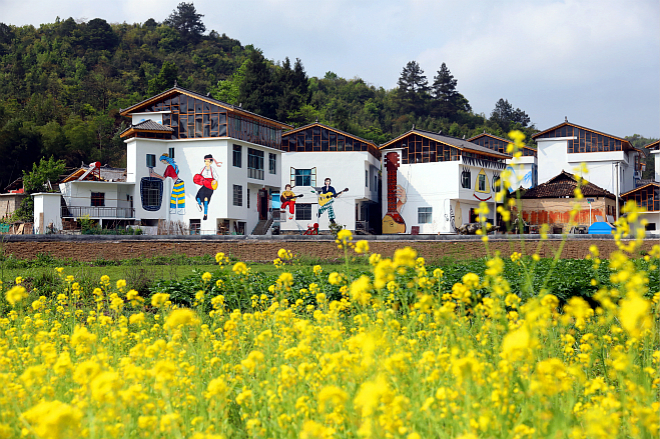
Pastoral scenery of Hongjiang Village. Photo by Liu Qinbing
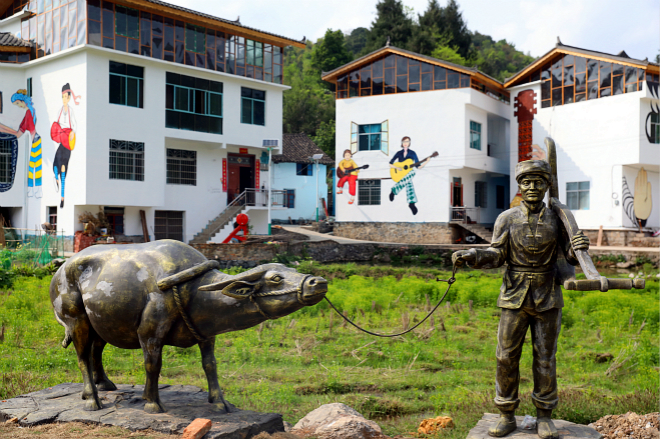
Sculptures can be seen everywhere in Hongjiang Village. Photo by Liu Qinbing
Feng needs bricklayers, carpenters and other skilled workers for the renovation project, which she estimates will cost up to 500,000 yuan.
"It will provide new jobs for villagers," Feng said. "More importantly, the arrival of outsiders will bring more resources and information that are useful to the economic and cultural development of the poor village."
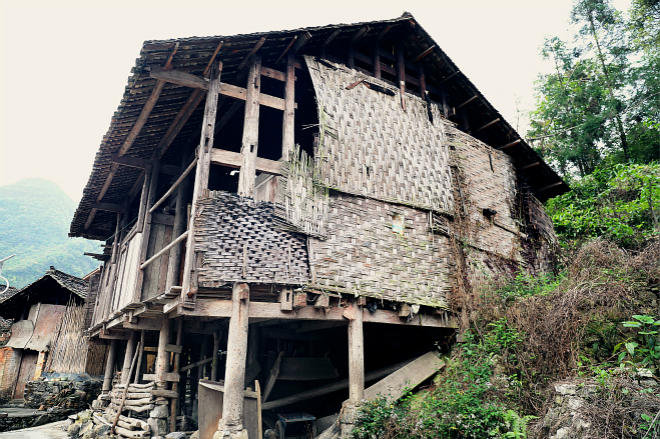
Traditional "pole-railing" style houses in Hongjiang Village are gradually abandoned. Photo by Liu Qinbing
Hongjiang is home to more than 1,400 residents. More than half of them leave home for cities and better pay.
Ma Lihua, a poverty relief official stationed in the village, recalled the scene when she first walked into Hongjiang -- there were few young villagers and the only primary school had three students left.
But the old houses abandoned by villagers who had moved to new homes and traditional crafts gave her hope to help the village out of poverty.
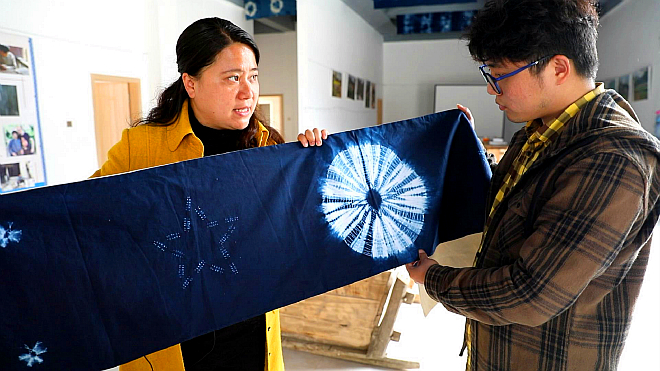
Ma Lihua shows the traditional tie-dyeing skills of Hongjiang Village. Photo by Liu Qinbing
In 2016, Ma and other village cadres started sorting architectural relics, customs and folktales, and introduced Hongjiang to artist communities in Beijing's Songzhuang art colony and 798 Art Zone.
Since then, hundreds of painters, writers, directors, architects and dancers have arrived at the small village, seeking tranquility or inspiration.
The changes even shocked Qin Yongjun, Hongjiang's village chief. "In the past, I felt that the old houses could only be left rotten and damaged. I didn't expect they could increase farmer incomes."
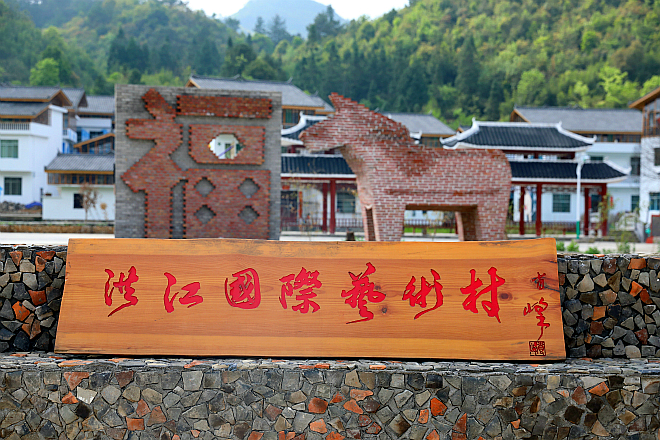
The plaque of Hongjiang International Art Village. Photo by Liu Qinbing
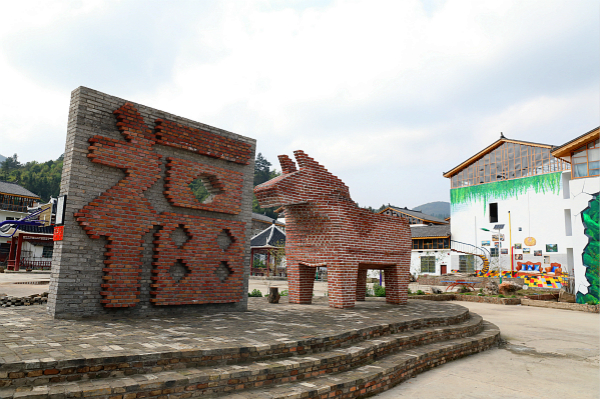
Artists design a mascot known as "Lucky Horse" for Hongjiang Village. Photo by Liu Qinging
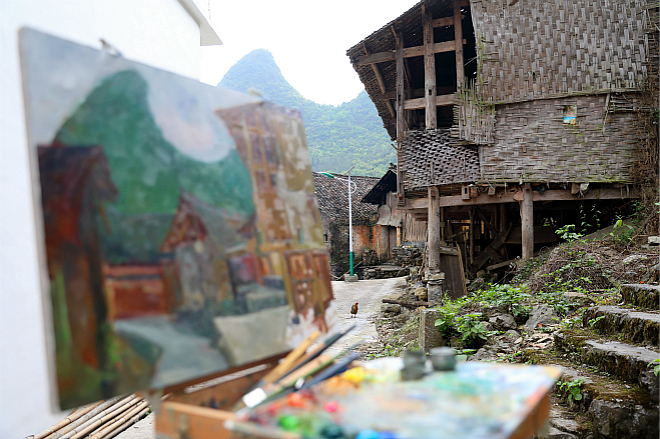
Inner Mongolia painter Doo Suilatu's paintings. Photo by Liu Qinbing
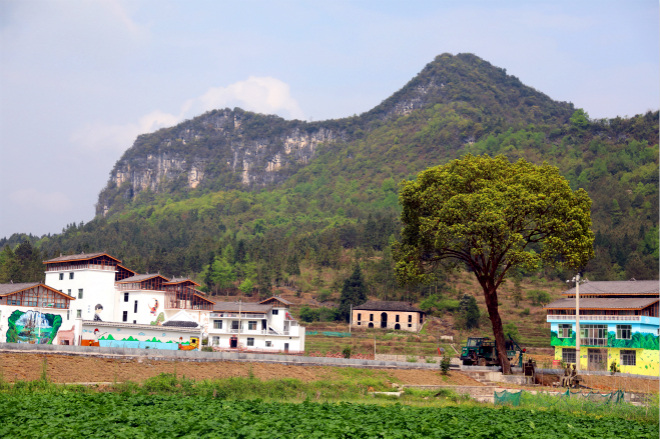
Pleasant scenery of Hongjiang Village. Photo by Liu Qinbing
The village now has six family inns, and more art workshops and homestays will open soon, Ma said.
As the village revives, over 300 migrant workers have returned since last year. Once abandoned farmland has been ploughed and planted with vegetables and traditional Chinese medicine herbs.
The average income for the villagers has more than tripled to 8,486 yuan over the past three years.
"Using art to rejuvenate villages is really good," said Xu Jia, an oil painter from Beijing. "The arrival of artists will wake up this remote ancient village."

