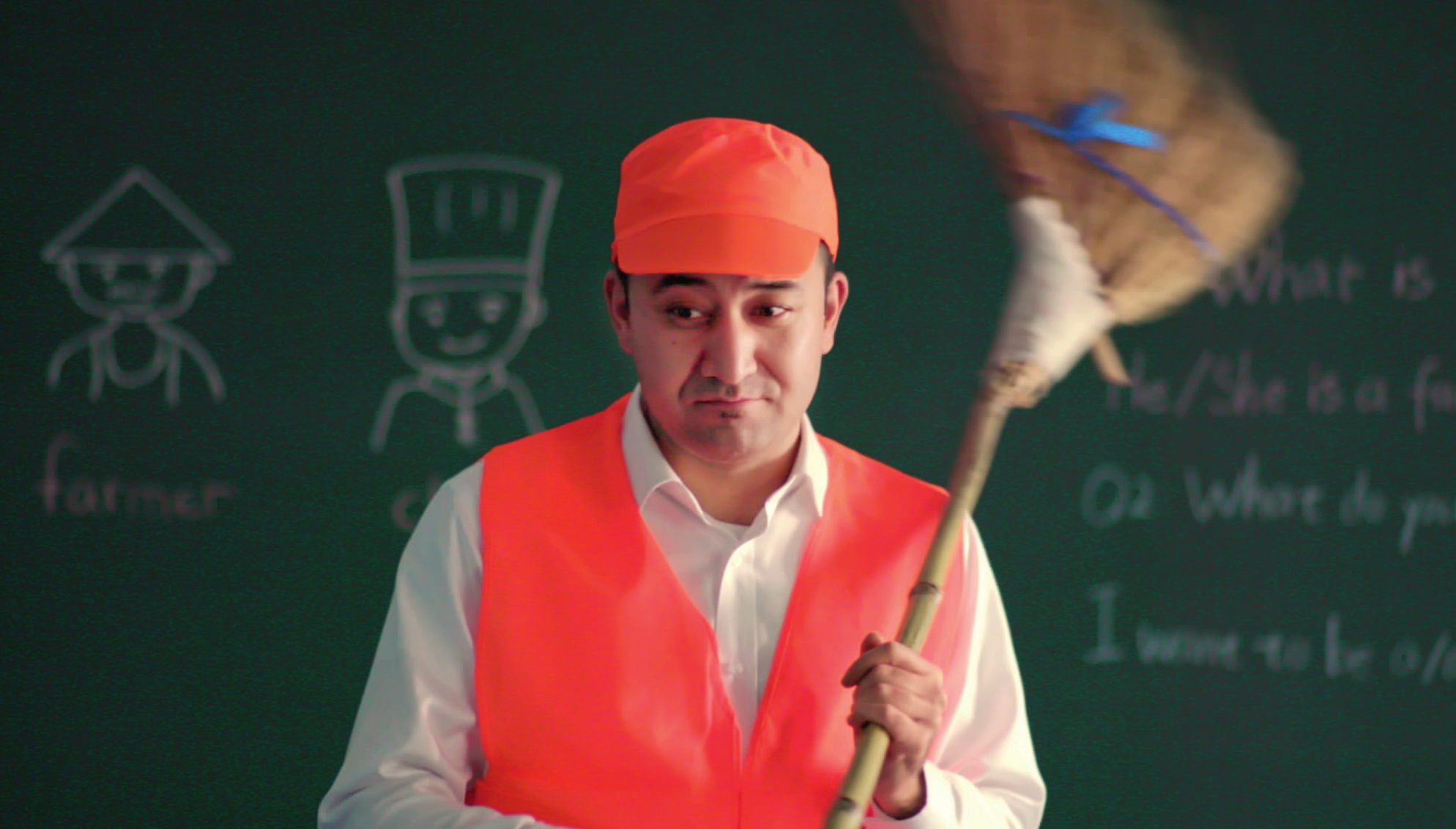
Kahar Basir: Xinjiang has historically been a civilized and pluralistic land of culture, economy and ideology. Living in a diversified environment, most Xinjiangers know exactly how to fit in with different cultures.
My story was shared in the book I Am from Xinjiang on the Silk Road previously published in October 2014. I talked about some of my experiences after I had come to the heartland from Xinjiang and I realized it was also an opportunity for me to see myself squarely. When I started looking for jobs in the heartland, the employer who hired me as an English teacher asked me to pretend to be a Chinese Canadian so as to increase student enrollment. I agreed to it because I was young and inexperienced and wanted a job badly. After staying on the job for 10 years, I am now the principal of the largest English training school for teenagers in Jinhua City, Zhejiang Province. On the other hand, more than 1,000 parents had consistently and seriously believed I was a Chinese Canadian. In I Am from Xinjiang on the Silk Road, I had made a commitment to declare at the year-end summary meeting my true identity as a Uyghur from Xinjiang. At first, I was concerned that the parents might be suspicious of me or lodge complaints against me, but they actually maintained their poise and calm and treated me with backing and tolerance. Their recognition of my work and ability has since relieved me of my burden of guilt.
At the start of the training school, I had thought of nothing more than teaching English. Three years later, however, I began to realize the importance of helping the kids better understand the society and the world as a whole. I had been teaching for six years before setting up my own business. During that period, I had felt strongly that our parents were prejudiced against colored people. It may not be discrimination, but rather lack of understanding, that gave rise to doubt, rejection and antagonism. Their attitude towards these people is very similar to the way they treat people from Xinjiang. Just because they look different or come from places that seem unwholesome, the parents would fatly reject them without giving them the slightest chance of being understood. I made the same mistake in the beginning lying about my ethnicity and not hiring black teachers.
When I first traveled to Beijing to seek a job, I was denied hotel accommodation due to my “foreign” look and had to sleep in a subway station for three nights. Today, I am still leery of ID checks when I travel away from home. In April 2014, when the vice principal of the school and I went to Shanghai for a job fair for foreigners, I was ID checked back and forth by both police officers and SWAT officers. Even before the journey, I had brought up with a coworker my worry about being ID checked and then denied hotel stay. I have expressed such concern with many people, and they are stunned such things could happen in China. Now I have learned how to protect my rights and interests by video recording each checking session.
As far as I am concerned, racially profiled ID checks could probably be puffed away in cigarette smoke, but one question has been haunting me: why do I have to be checked? In fact, people from Xinjiang hate criminals more than anyone else from other places. In fact, Xinjiang people hate criminals more than anybody in any other place. When asked whether those are my compatriots, I would say I never see criminals as my compatriots. Only good compatriots are my compatriots, the bad ones never are. However, apart from indiscriminate checks similar to those carried out in wartime, there seems to be no better ways of solving the problem, which makes me feel very sad sometimes.
As one of the most important stops on the ancient Silk Road, Xinjiang has historically been a civilized and pluralistic land of culture, economy and ideology with rich connotations. Living in a diversified environment, most Xinjiangers know exactly how to fit in with different cultures. However, discordant voices have been heard in recent years. For example, some people have emphasized taking pride in religious faith or ethnicity rather than in our vast and culturally diverse country. I have been rebuked by my relatives in Xinjiang for not going back and teach the kids in my hometown. These relatives are no different from those who criticize Jack Ma for not donating money to disaster-hit areas in China and those who criticize some Chinese celebrities for participating in UN charitable activities while neglecting the poor in China. Is there any specific case, whether in social tradition, law or history illustrating that an educator of any ethnicity is obligated to serve its own ethnicity only? That’s the question I want my critics to answer. Some people call this moral kidnapping, but I think it has nothing to do with that. The real issue is, we should not divide children based on ethnic background. Do we really have to tell the difference between Han and Uyghur children? Why don’t we just leave our kids alone after we have classified adults according to specifics of birthplace, place of origin, religious belief, ethnicity etc.?
After running the school for three years, I started hunting for English teachers of African descent so that students may learn how to accept and adapt to a multicultural environment. I did find one after making a great deal of efforts. As a relatively unknown third-tier city, Jinhua is not a priority choice for foreigners seeking teaching jobs in China. Once I find a good candidate, I would spend an hour telling interviewees about the benefits of living and working here.
During his first three months here, the black teacher found it very hard to get used to the weather, language, culture, food and transportation. What bothered him most was people’s focus of attention on his physical appearance. He was tall and handsome and very attractive while out on the streets walking. I tried hard to talk him out of his feeling of embarrassment, telling him that people stared at him just because there was something neat about him and that they were just being curious, but I couldn’t make him feel any better. Our kids can get very curious too. They would at times call him “black” right in his presence, which would be very inappropriate in the United States. The teacher felt badly hurt, when in fact the children were just being straightforward about what they saw without any ill will. They had no idea what undertones that word carried. After all, they had never been taught to be sensitive about that, nor had they ever come across such an issue. I spent a lot of time with the African American teacher during his first three months on the job, showing him around the city every week so as to cheer him up and make him feel less stressed out.
On the other hand, I talked with parents who were unhappy about my choice of an African American teacher, citing every possible reason to explain why. “US president Barack Obama is black too,” I would say. But it was no help. Ultimately, I asked the parents to give the teacher three months to prove himself. If he failed to meet their expectations, I would hire a new teacher and give them a three-month tuition waiver. The teacher proved himself capable. Psychological counseling to other members of the teaching team is no less easy. They have a mentality similar to that of the parents and feel uncomfortable sitting by the African American teacher in the office. And there were other issues that I had never thought about before. However, the greater the challenge, the more determined I was to meet it. When parents refer to the African American teacher as “black teacher,” I would tell them bluntly to call him by his name. “He has a name too,” I would say.
Today, I have made it clear to parents that I won’t hire anyone based on skin color. If they trust me, they will need to trust the teachers I hire as well. I won’t budge on that. Over time, I will hire a Chinese American teacher too. I want the children in my school to understand that people in the world can be different color and that we should not judge anyone by appearance or place of origin or deny anyone of opportunities to use his or her talents.
Immersion in a multicultural environment will help kids growing up in a monolith culture gain a better understanding of and appreciation for diversity and therefore be more considerate and tolerant. For example, Chinese people grown up in a diverse environment would ft right in when they start their career in an exotic place like Africa. Conversely, those who know little about the about before. However, the greater the challenge, the more determined I was to meet it. When parents refer to the African American teacher as “black teacher,” I would tell them bluntly to call him by his name. “He has a name too,” I would say.
Today, I have made it clear to parents that I won’t hire anyone based on skin color. If they trust me, they will need to trust the teachers I hire as well. I won’t budge on that. Over time, I will hire a Chinese American teacher too. I want the children in my school to understand that people in the world can be different color and that we should not judge anyone by appearance or place of origin or deny anyone of opportunities to use his or her talents.
Immersion in a multicultural environment will help kids growing up in a monolith culture gain a better understanding of and appreciation for diversity and therefore be more considerate and tolerant. For example, Chinese people grown up in a diverse environment would ft right in when they start their career in an exotic place like Africa. Conversely, those who know little about the problems at work. By the time his printing factory started using more advanced technologies, he got laid off because of his inability to speak Chinese. Having learned his lesson the hard way, he sent me to Mandarin-based schools when few parents wanted their children to learn more than one language. My personal experience has shown clearly that knowing three languages can be a huge boost for my career.
Learning Chinese was by no means easy for me. During third grade, my head teacher told my dad I was doing no better than first-graders in Chinese. He suggested that I transfer to a Uyghur-based school instead. For three times I had thrown my books into the toilet because I couldn’t bear the way other kids looked at me or ridiculed me. When my dad knew about it, he talked with me and gave me a good licking before begging my teachers to give me extracurricular tutoring. I was able to catch up after one semester’s hard work. Because of my dad’s insistence, I was able to stand my ground and not give up. In my eyes, my dad is a great teacher. He has taught me kindness, independence, and prayerfulness and has exhorted me not to do evil or care too much about the riches of the world. He has also taught me practical things, such as teamwork in building a solid house with our own hands. After he got laid off, he bought second-hand furniture for refurbishment and then resold it in a bazaar. We each had a trolley that we used to carry the refurbished furniture to the market more than a dozen miles away. He has also taught me how to hoe the crop fields, how to demolish old houses and has done many other chores with me. After living through many hardships with him, I have nothing to fear any more. My dad is now having a hard time with serious glaucoma. He needs help even for small things like changing a light bulb. My handicapped stepmom is no help and my youngest sister is only six years old. So, he has to call my cousins who could keep him waiting for as long as a week. I feel very guilty about my unavailability in times when he needs me, more so because I know how much I owe him. Without him, I would not have been able to enjoy life as I am enjoying it today. I returned to Xinjiang in August 2014 and stayed there for a full month. I drove all the way from Jinhua to Aksu, helped Dad fix the leaking sewer system in his house, changed the dead light bulbs and drove him to Ili and Korla for sightseeing. While away from each other, Dad and l would pray for each other and ask Allah to take care of our concern for each other.
My biological mother was in very poor health and had to stay in hospital for at least six months a year. So, Dad had to take care of her a lot even though they were on bad terms with each other. Left with no parental care, my sister and I had to live like demi orphans for years for between one week and one month per household. Like many other kids, we enjoyed running around sweating, especially in PE classes. But we often went without taking a bath for a long time just because we were too embarrassed to do that in someone else’s home. Most of the relatives we stayed with were nice to us, but there were also a few who rolled their eyes at us in disgust.
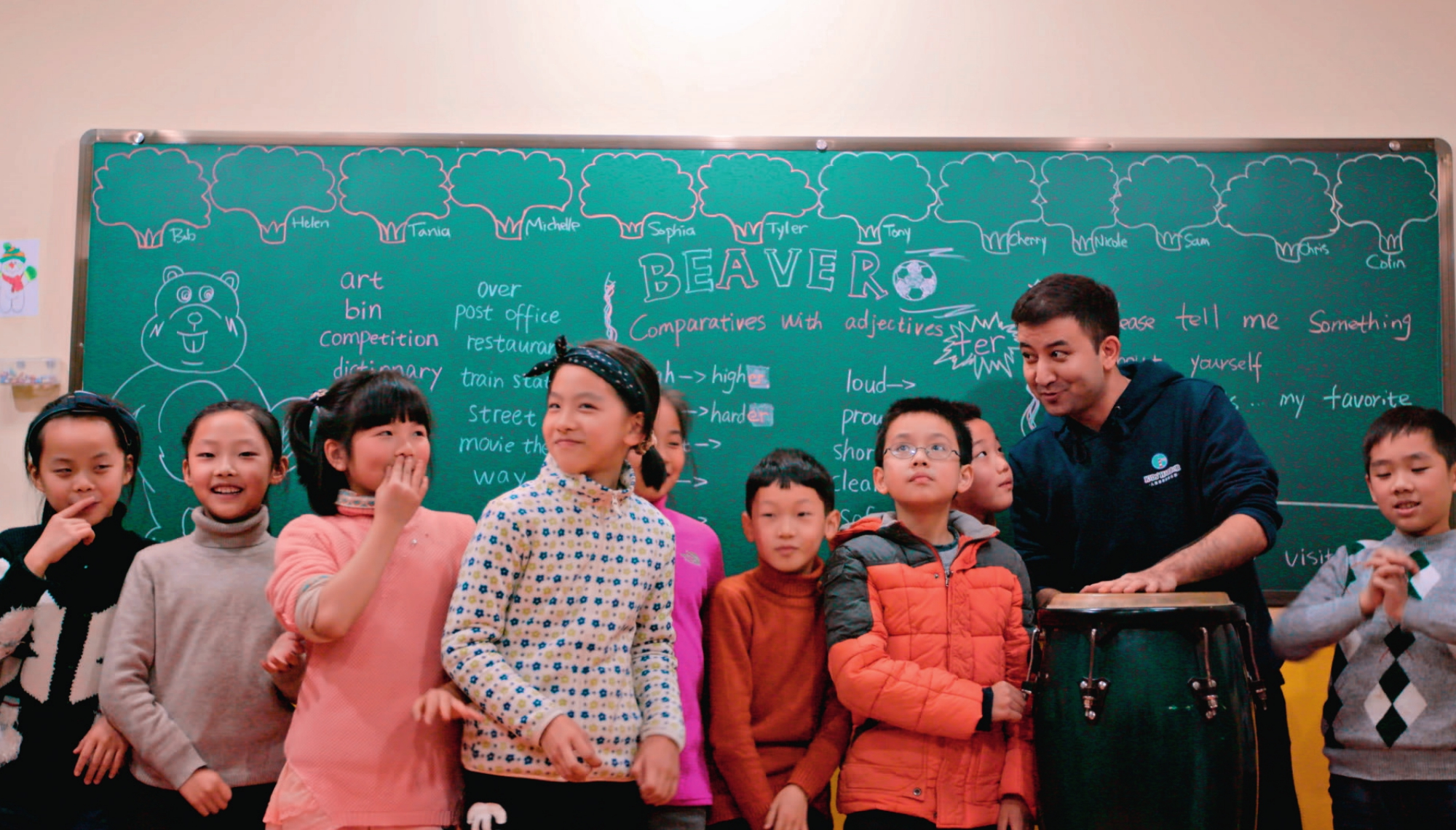
My sister now works in the publicity department of the municipal government. Because of her excellent command of Chinese and English, she is assigned to serve as interpreter for domestic leaders and foreign guests. At age 30, long past the “normal” or “standard” age for marriage, she remains single, which is something incredible for people in Xinjiang. However, she is a happy, liberal-minded woman who knows how to balance her emotional life. She would love to seek my advice on how to develop intimate relationships, but as a divorced person, I don’t see myself as good at that either.
Most Xinjiangers who come to the heartland for a better career want to shoot for the best. Few of them would want to stay in second or third-tier cities. Almost no one would want to come to where I am at. Hence, finding an ideal spouse here can be very difficult. Many people tell me it shouldn’t take more than a month for me to find a fiancée. That may be the case, but would she be a good match for me spiritually? A man is supposed to have three types of responsibilities by order of priority: responsibility for himself, responsibility for his family, and responsibility for society. For me, however, that order goes in reverse. An uncle of mine once offered me a very good job in Xinjiang, but I turned him down because I wanted to do what I wanted to do. I wanted to make a living on my own because independence and freedom are of greater value to me. Right now, I haven’t met any girl who truly understands me. Uyghurs are a family centered ethnic group. Uyghur girls are unlikely to part a peaceful and stable life with their parents and marry someone far away from home.
The biggest problem I am faced with now is that my team members are too young, most of them being recent graduates who have yet to fully comprehend my corporate mission and to be molded into role models that will convey the cream of our values. The better these role models are, the more outstanding our kids will be. Any failure to meet my requirements would mean compromised teaching quality to the detriment of the kids. This problem does not apply to my school alone, but to many other businesses as well. From our parents’ generation to our own and further down to the next, there is an ongoing trend of loss of valuable things, including but not limited to sense of responsibility, perseverance, and the principle of “putting collective interests before personal ones and putting hard work before pleasures of the flesh.”
At a training session I gave to my staff, I told them about Darwin’s theory of evolution and I said that if adversity could turn monkeys into humans, a life of ease and comfort could also turn humans into moneys. Living under some pressure can be a good thing. I can easily see that in my partner, who is also my biggest shareholder at the school. He is a native of Yiwu. Though not very rich, he is definitely a successful businessman who owns a company and a factory. He served in the army before becoming a cop and starting his own business at 40. He certainly needed courage to quit his stable job for something uncertain.
I met him at the Yiwu school when I was 25 and he was 42. I was the English teacher and he was my oldest student. I didn’t understand why he, a successful businessman driving a luxury car to school, wanted to study English but I knew he was very serious about what he was doing and I wanted to do my best to help him.
One day after class, he offered 10,000 yuan more than what I was making at the school to hire me as his private English teacher. I could hardly refuse that! We signed a one-year contract which provided that I would teach him two hours a day except for certain holidays. The contract also provided that I would be penalized for failing to make lesson plans and for being tardy. He had never been late for class except the day his mother died. Later on, he invited two of his friends to join him. I was much moved by his persistence. In those days, while spending time in pubs, I sometimes wondered why a man of his age would be so devoted to learning something new when he was already quite established. One early morning, after I had spent a whole night sitting in a pub, I decided to check on him about his claimed habit of morning reading in a park. When I got to the park, I saw him reading English for real! Later on, I went to him for help as I started looking for business partners. He has become my teacher conscientiously teaching me how to run the school.
I don’t think we should commercialize education, even though we are doing exactly that today.
I am a teacher-turned-principal who always think I am more cut out for teaching. When faced with extraordinary hardships, I seriously wanted someone else to be the principal while I focused on teaching. In the early days of running my school, I was so idealistic that I basically acted at will, without thinking about consequences. As a result, I nearly ruined myself and my school. There were times when I got so broke that I didn’t even have money to pay wages or to buy food for the family.
Today however, I have learned to be less egocentric and more responsible for my team. I often tell my team that we must have two ways of thinking, both as administrators and as teachers. Sometimes, I get mixed up about the role I am supposed to be playing. At a monthly class meeting, for example, I found myself taking the kids for my staff and being harsh on them. In my capacity as the principal, I am sometimes soft-hearted or indecisive and I find myself inadequate in balancing various interests. There’s a huge difference between entrepreneurship and teaching. An entrepreneur pursues profits, while a teacher expects to gain spiritual rewards from kids. It’s sometimes difficult for me to switch between the two roles. But now, I’m acting more and more like a principal. It doesn’t mean I’ve compromised anything. I’m just flying a little lower than before.
For me, the greatest and happiest part of being a teacher is the opportunity to help people. The little ones in my school who have learned how to make fun of me in English are on very good terms with me. They are trustworthy and unsophisticated. Today, many training institutions are shooting for quick fixes and quick success and I sometimes find myself entangled in that as well. However, I do think there needs to be a standard bearer in commercialized school management and I do want to build a conscionable educational institution with a sense of mission. In the past, I wanted to shoot for 100 branches, but today I just want to shoot for the best, even if it may mean just one school.
(selected from Xinjiang: Beyond Race, Religion, and Place of Origin by Kurbanjan Samat, translated by Wang Chiying, published by New World Press in 2017)