It is generally believed that January 1 is the start of a new year. This is not the case for some ethnic minority groups in China. For instance, Tibetans have their own calender and celebrate New Year on the 1st day of the twelfth month of the Tibetan lunar calendar. Other ethnic minority groups such as Miao and Dong ethnic minorities also celebrate their traditional new year on different days respectively.
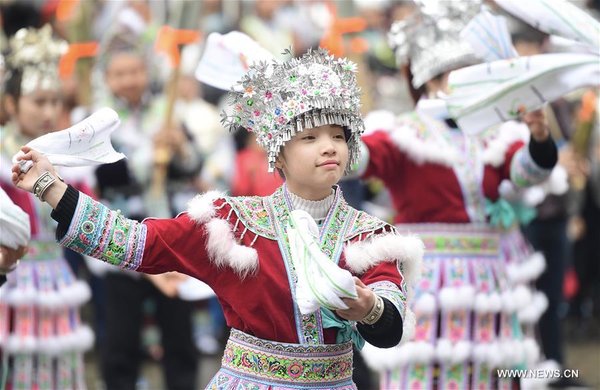
Recently, people of these three ethnic minority groups have dressed up and organized various events to celebrate their traditional new year festivals.
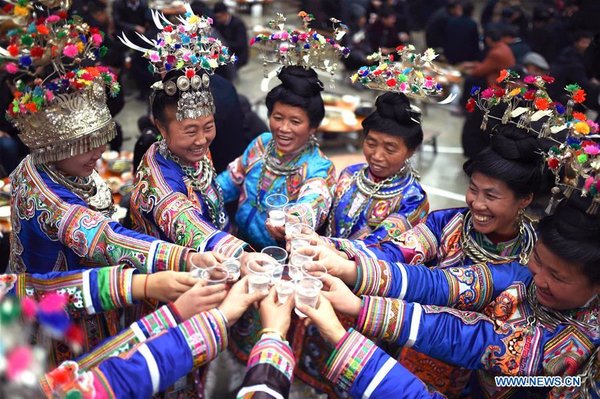
Women make toast during a folk fair to celebrate traditional New Year festival of the Dong ethnic group in Rongjiang County, southwest China's Guizhou Province, Jan. 18, 2018. [Xinhua/Dai Tianfang]
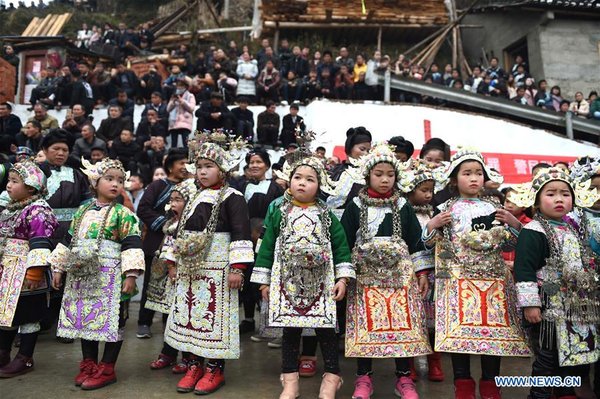
Children view performances during a folk fair to celebrate traditional New Year festival of the Dong ethnic group in Rongjiang County, southwest China's Guizhou Province, Jan. 18, 2018. [Xinhua/Dai Tianfang]
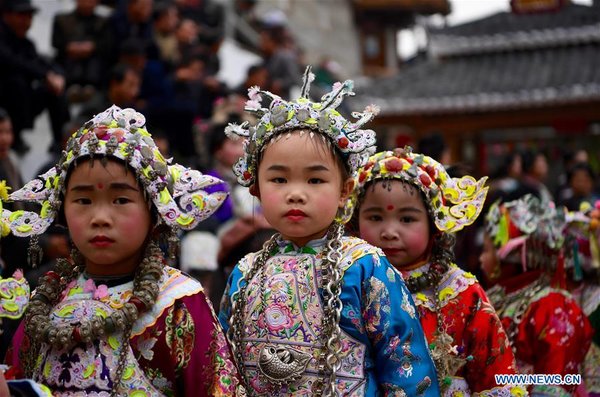
Children wearing hats with the characteristics of Dong ethnic group attend the Dong New year festival in Renjifu Village of Dong ethnic group in Rongjiang County, southwest China's Guizhou Province, Jan. 18, 2018. [Xinhua/Wang Bingzhen]
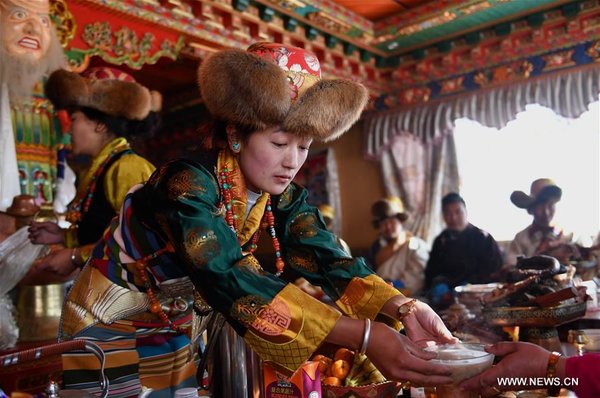
Villagers serve wheat porridge to elders in Chusong Village of Nyarixung Township in Xigaze City, southwest China's Tibet Autonomous Region, Jan. 17, 2018. In Xigaze and other farming regions of Tibet, people celebrate New Year on the 1st day of the twelfth month of the Tibetan lunar calendar. According to local farming tradition, spring ploughing season always begins as the fall of New Year, thus celebrating one month earlier is to meet the needs of local agriculture. [Xinhua/Jigme Dorje]
People dance to celebrate traditional New Year festival of the Miao ethnic group in Rongshui Miao Autonomous County, south China's Guangxi Zhuang Autonomous Region, Jan. 17, 2018. [Xinhua/Huang Xiaobang]

