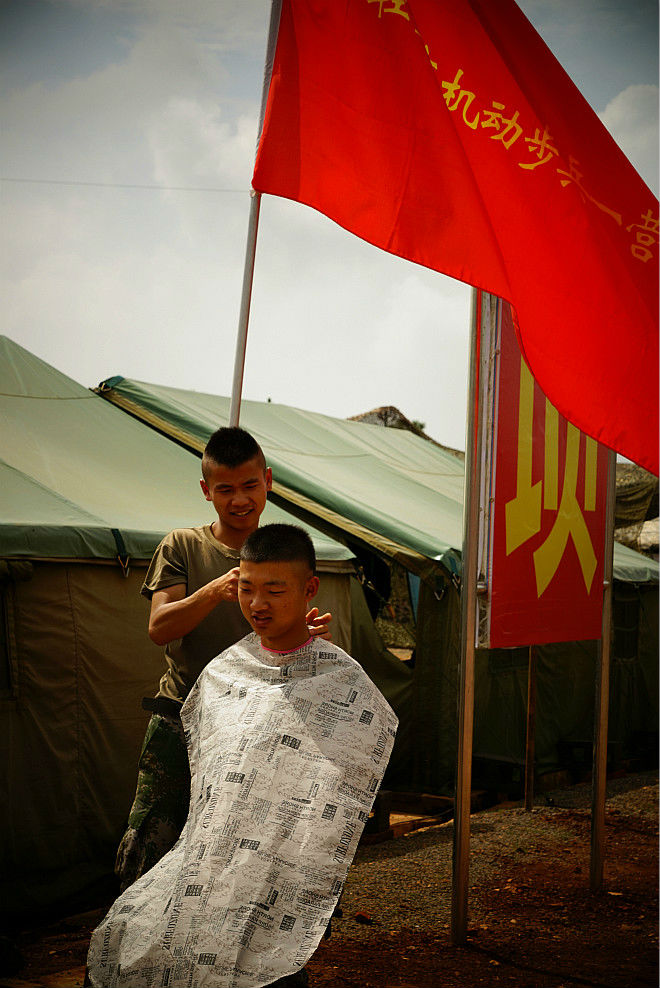
Before combat training. Photo by Wen Chihua
Kuang Mengzhao, a 22-year-old soldier, sports a Mohawk but sounds like a battle-hardened veteran when he speaks of national security and the army's duty.
"Just because you're living in peacetime doesn't mean the world is peaceful. There are often military movements in neighboring countries and regions," he said.
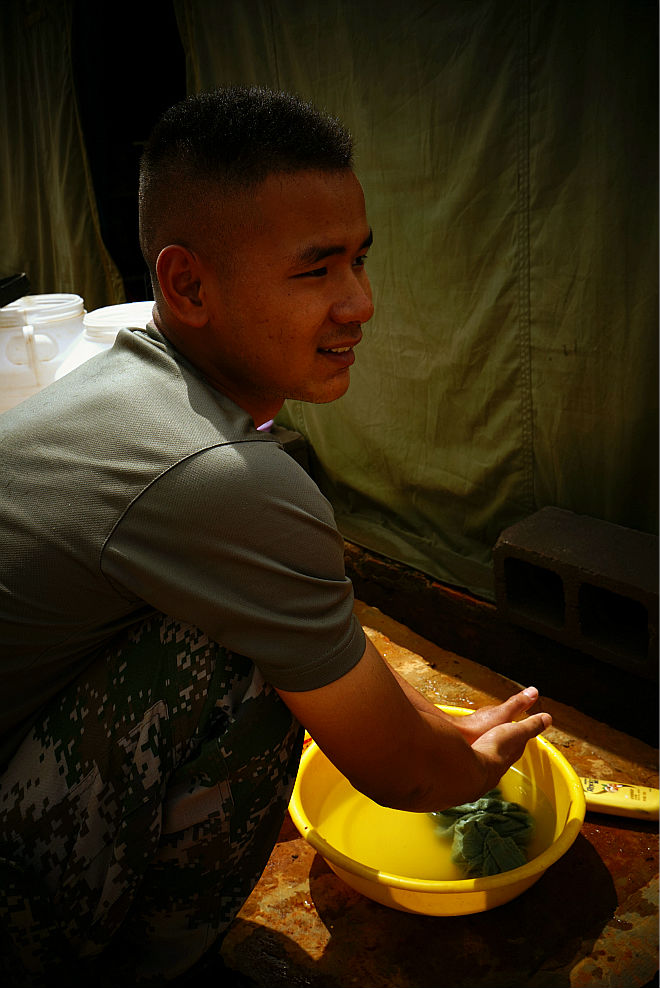
Kuang Mengzhao. Photo by Wen Chihua
The son of a small-business owner in Xinning County, Hunan Province, Kuang is keen on singing pop songs such as Dream Chaser. One of the love song's lyrics-"The blue sky in my heart is where life begins"-has personal significance for him.
"Serving in the army was a new beginning in my life. We feel proud when we can do something for our homeland when it needs us," he said.
Kuang and his comrades-in-arms in a mechanized infantry brigade are concentrated at M training base in Yunnan Province, undergoing four months of combat exercises in accordance with the state leadership's ambition to cure "peace disease."
PEACE HURTS
Identified as a deadly corrosive to the military's fighting capacity, and the biggest challenge in preparing to win future wars, peace disease has invaded the Chinese army and weakened its capacity and willingness to fight, according to a senior officer at M base, who asked not to be named.
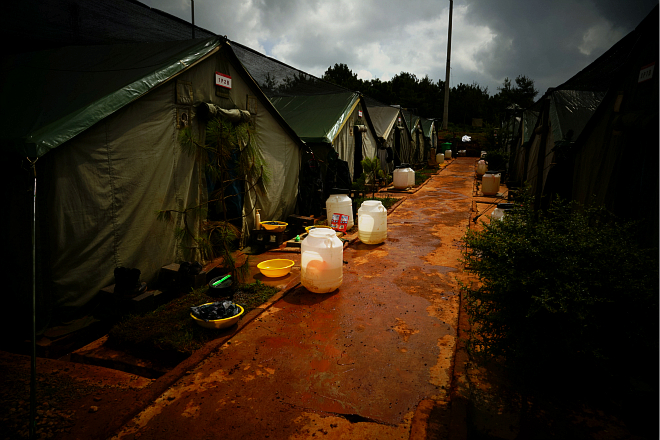
Camping ground at the M training base. Photo by by Wen Chihua
The M training base belongs to the Southern Theater Command (STC), one of five war zones of the Chinese People's Liberation Army. The STC was founded in 2016 and is responsible for the security of China's frontier bordering Vietnam, Myanmar and the South China Sea.
"It's China's south gate. The country's strongest economies-Guangdong Province and Hong Kong-are located in the center of the Southern Theater Command," he said.
The training base is the PLA's only military training facility for mountain and jungle combat. Roughly 2,000 kilometers from Beijing, it comprises nearly 100 square kilometers of hills and thick vegetation.
TRAINING GROUND
The M base has been used as an integrated training ground for war games since the 1950s. In the wake of the reorganization of the forces in 2017, the area started to be used for large-scale, division-level combined simulations.
The army's success in operations is based on excellence in training and preparation. And yet, the PLA at large has suffered peace disease for years, because the army hasn't experienced real combat over the past 30 years. The peace disease has depressingly affected the war-gaming exercises in terms of training standard and the work style of commanding officers.
Peace disease means the country has been in a time of peace for so long that the threat of war has lost its edge. The army has a weak awareness of the fact that it is no longer really prepared for war, and therefore does not see war game exercises and manoeuvres as preparation for real combat.
In the minds of many officers and soldiers, there is no serious threat to the country in peacetime, only peaceful development.
Quite contrary, the senior officer says, "a serious threat of war does exist."
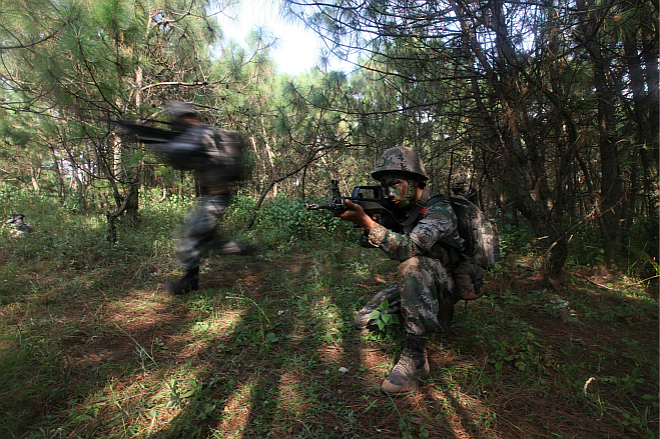
Jungle combat. Photo by Jiang Pingji
Peace disease has bred hedonism and corruption. The PLA at large is launching an attack on the peace disease phenomena. Some high-ranking officers have pointed out that some soldiers are in uniform but they don't know the strategy or tactics of war. These soldiers would be incompetent on the battleground but are a success at the dining table. They are more intent on trading their positions of privilege for material gain than in preparing to fight for the country.
As a result, the PLA's strong points, reconnaissance operations and night fighting, have faded. During a war game at the M base last year, a mechanized battalion got lost at the junction of two roads when the lead detachment took a wrong turn. By the time the mistake was discovered, two-thirds of the troops had already passed the junction. It took them more than an hour to change direction.
"This would be a fatal mistake if it happened in an actual war," says Wang Wei, deputy commander of the base. "Some troops think of combat training as a performance. The command personnel sit around the command post, waiting for information. Under these circumstances, much of the information the scouts obtained was either false or useless. Very few were accurate."
NIGHT OPERATIONS
Night fighting is said to be the PLA's other forte. During the Korean War there was a popular saying on the battlefields: The daytime belongs to the U.S. Army but the night belongs to the Volunteer Army. The Chinese People's Volunteer Army under cover of night beat back the attacks of the US Army, and fought five bloody battles in the dark, which eventually prompted the Korean Armistice Agreement.
"But today our army doesn't even know how to properly move at night," said Chen Xiaobo, deputy chief of staff responsible for combat exercises at M base.
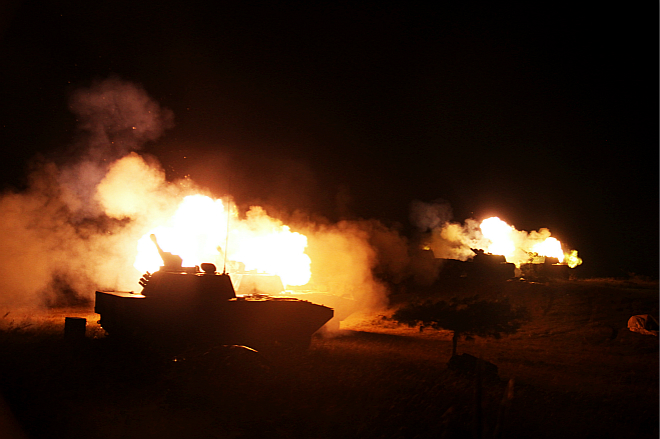
Night combat shooting drill. Photo by Jiang Pingji
He cited a large-scale drill in 2014 as an example. It was a mock maneuver taking place in the Zhurihe Combined Tactics Training Base located deep in the Inner Mongolia autonomous region. The drill involved battles between red and blue units. It required the troops to undertake maneuvering drills for a day and a night. No artificial lights were allowed. As a result, some troops got lost and some tanks drove into deep ditches. When the troops called the headquarters, they couldn't tell their command officers exactly where they were.
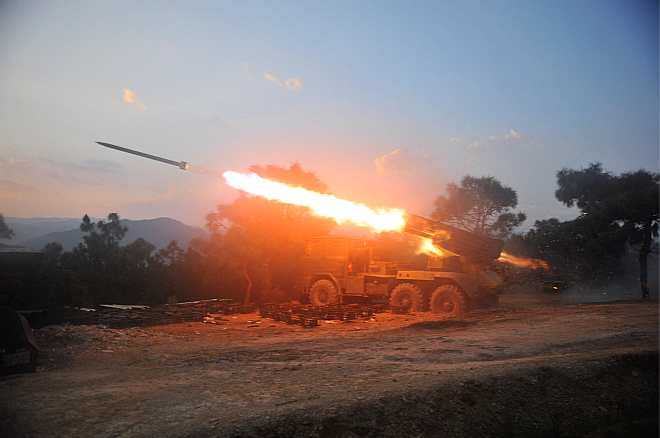
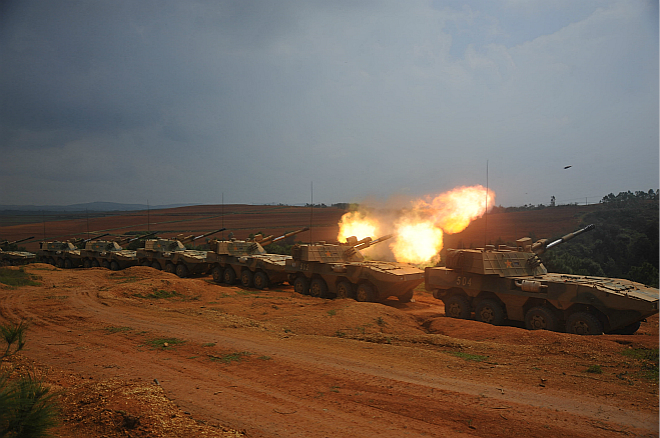
Rocket guns fire. Photos by Gao Longjun
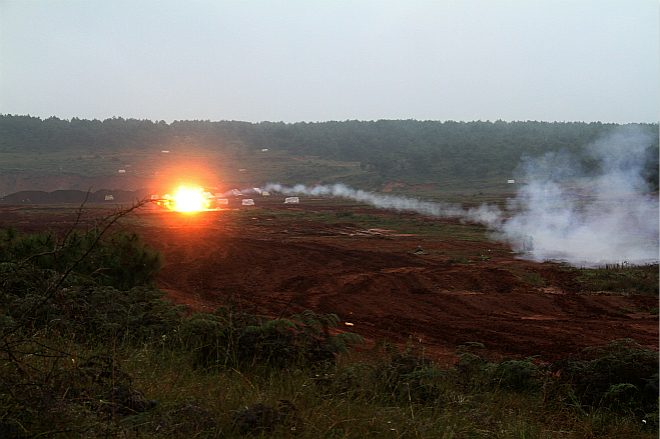
The obstacle-breaking team removes the enemy's fire points. Photo by Jiang Pingji
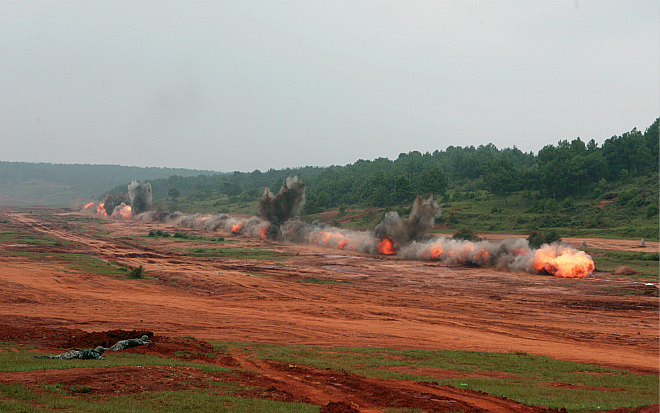
Breaking frontier barriers. Photo by Jiang Pingji
In Chen's view, to ensure the PLA has the ability to win wars, the Chinese army has to cure peace disease.
"The only way we can do this is to hold joint training exercises with the intensity of live combat, between different military regions and between naval, air and ground forces."
NO LONGER SIMPLE
The Military Training Program, which was released early this year, places demands on the military to intensify resistance drills and train the troops in an environment similar to real combat. A training base like M base is no longer a simple training base. It is now a battleground.
The M base command has designed a series of battle exercises.
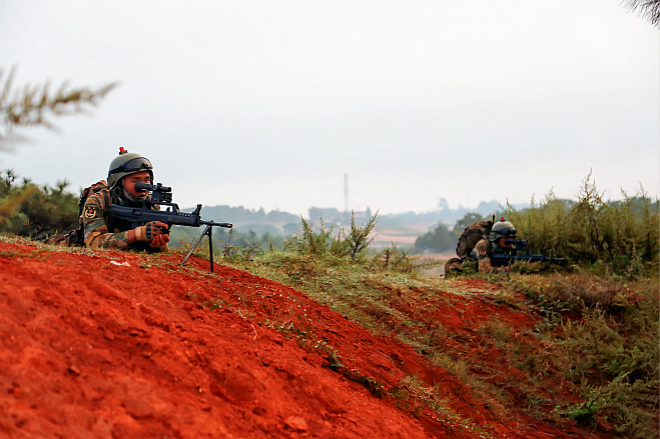
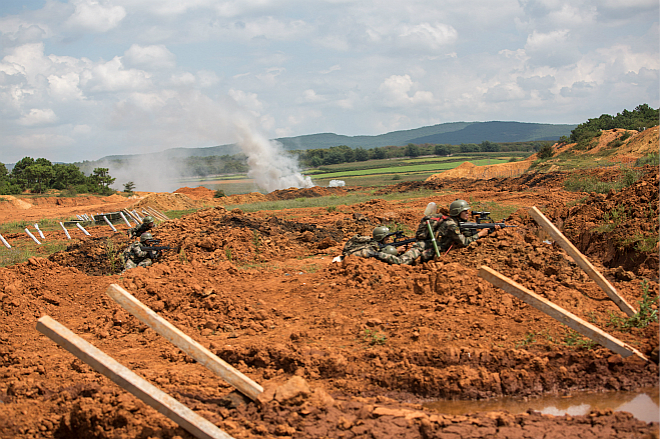
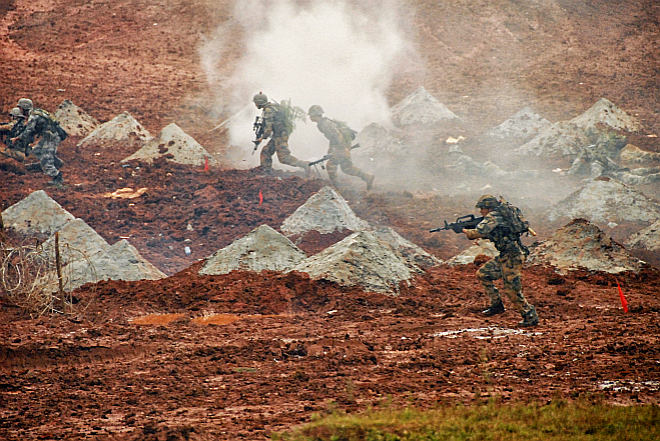
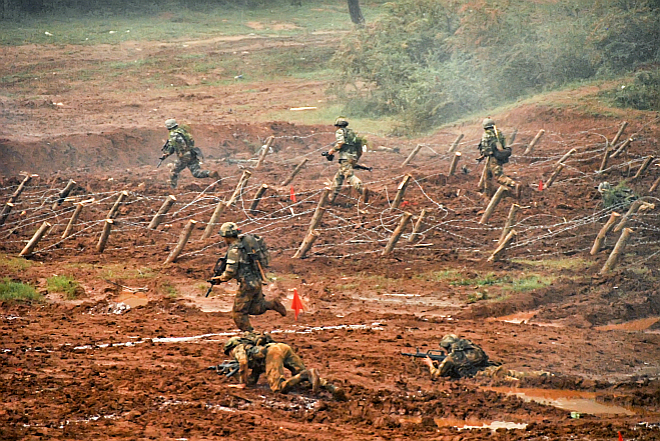
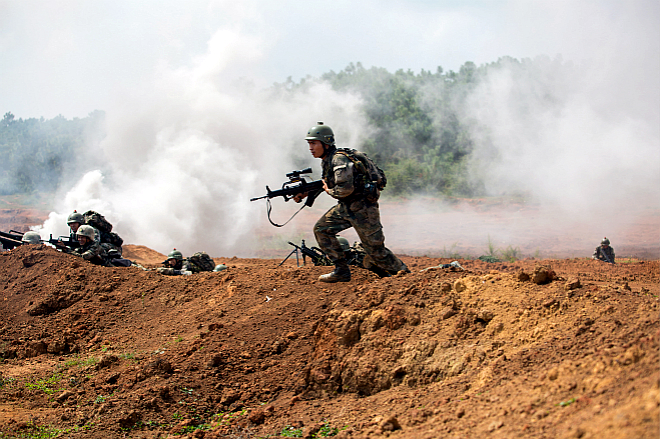
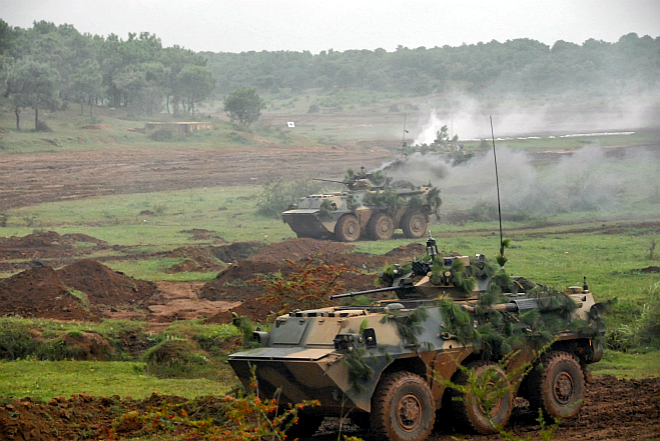
Both red and blue units use the laser engagement system for actual combat.
PLA troops from different regions are organized into red and blue units that engage each other to test the army's ability to integrate and operate in a combined environment with allies. Normally, the blue units imitate tactics and command systems similar to those of a Western army.
"These exercises ensure that we continually learn and adapt faster than our opponents," Chen says.
In addition to combat troops, the students of the Army Medical University also undergo training at the M base, working on combat care, and medical evacuation procedures.
"The training ground is not a theater to perform a war" Chen says. “It is intended to provide realistic battle conditions where Chinese soldiers can enhance their combat skills. We don't teach strategy or theory here. We teach how to fight a war, and how to win a war. You cannot afford any exercises done for show, as the training ground is the last stop before an army goes to the battlefield.”
This is crucial. Because “too many of our officers and solders are like Kuang Mengzhao, who were born after 1985, and have only seen wars in the movies,” he says.

